Trenchless Pipe Laying

Guided Auger Boring

Guided auger boring is a technique for constructing small-diameter tunnels that uses a mechanical excavation method, typically employing a screw as a means of transporting excavated material and a pilot hole as a path for pipes or other utilities to be inserted into the ground behind the boring machine using the jacking method.
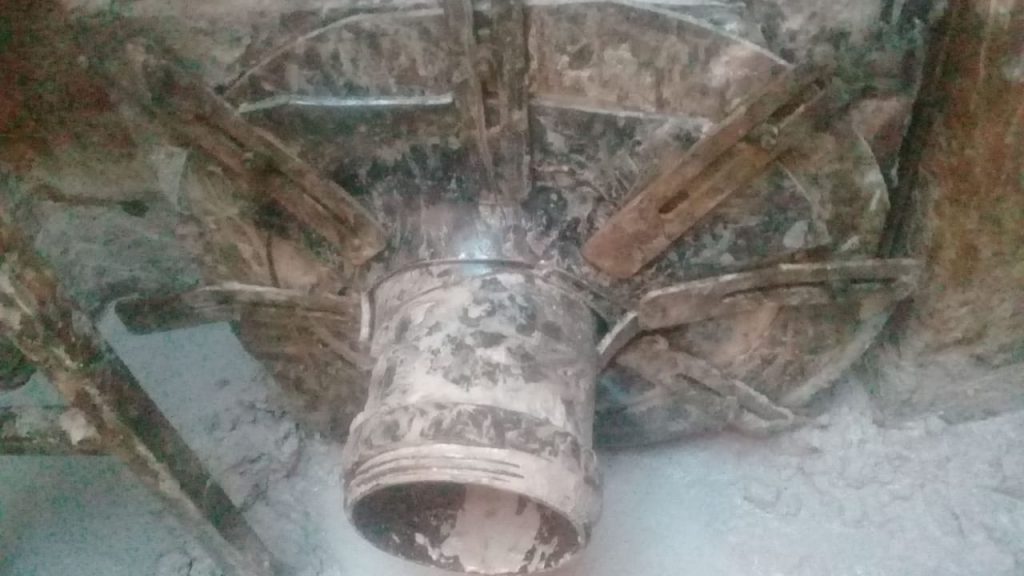
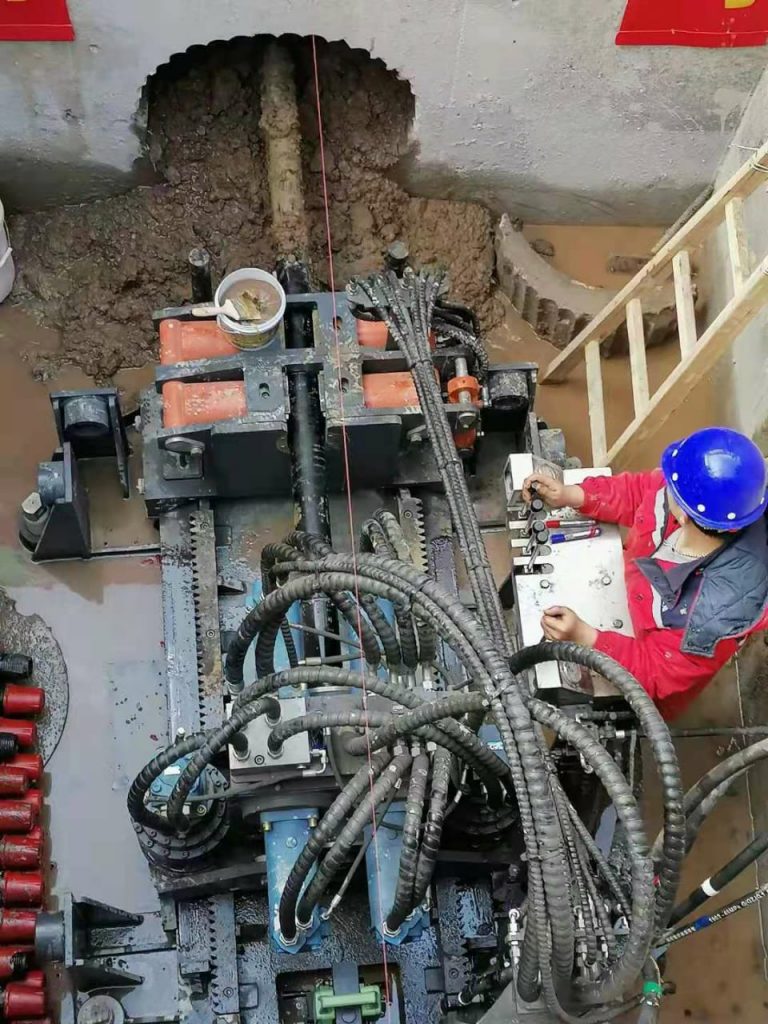
The difference between this method and the Horizontal Directional Drilling (HDD) method is that in this method, the pipe is continuously installed directly behind the drilling machine to serve as casing or support for the excavated soil, thereby minimizing the risk of soil collapse on the tunnel walls due to the absence of support.
– Pipes – The pipes used in this method are strong pipes capable of withstanding the pressure caused by the thrust force during the pipe jacking process. Pipe Types: : RC Jacking Pipe (RCP), Vetrified Clay Pipe (VCP), Polymer Concrete Pipe (PCP), PVC Jacking Pipe.
The trenchless method has several advantages, including:

  • Excavation and soil removal are kept to a minimum to minimize environmental impact. Only the volume of soil equivalent to the pipe’s diameter is removed, rather than the entire excavated volume as in conventional pipe installation methods, regardless of the pipe’s depth.
  • The Maranti Guided Auger Boring system operates with minimal traffic disruption and minimal impact on surrounding facilities. The entire construction site requires only a small amount of space on busy roads.
  • With GBM, small-diameter pipes can be installed—a task that is not feasible using other trenchless methods (such as Microtunneling).
  • The Guided Auger Boring method uses significantly more compact equipment and requires far fewer resources than Microtunneling.
  • Construction work is not weather-dependent, resulting in high reliability and cost-effectiveness.
  • High accuracy in pipe route positioning with very tight tolerances is achieved through the use of a laser guidance system during piloting, and repeated corrections can be made if the route still does not align with the design.

Pipe installation involves three main processes :

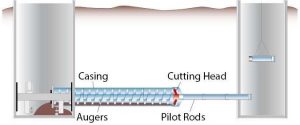
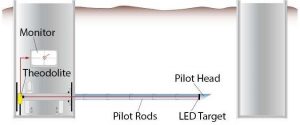
  1. Piloting – During this process, guided by a laser guide and LED beacons mounted on the leading pilot head, the drill rod is installed along the pipeline route to be laid.
    Step – 1, Piloting

    During this piloting operation, the laser must remain on and indicate the specified azimuth and elevation.
    The operator continuously monitors the direction of the pilot head’s movement to ensure it remains aligned with the specified azimuth and elevation. If at any time the pilot head deviates from the specified direction, the operator may retract some or all of the drill rods to repeat or correct the operation.
    The laser device is periodically checked to ensure it always indicates the correct direction.
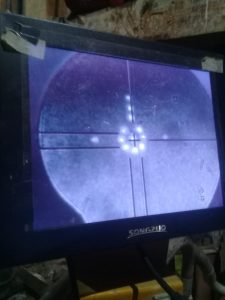
    Monitoring the piloting process.
  2. Once the pilot head has reached the receiving pit, an adapter is attached to the rear end of the drill rod, and a screw auger casing is then installed to push the drill rod in front of it. In the receiving pit, the drill rods are removed one by one and stored for use in the next section.

  3. Once all the screw augers have arrived at the receiving pit and been installed along the span, there are two options for proceeding:
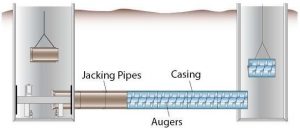
  • If the production pipe to be installed is smaller than or the same size as the screw auger casing, a connector is attached to the rear end of the auger casing to connect it to the production pipe, allowing the production pipe to be pushed or jacked directly behind the auger casing. While the production pipe is being pushed, the auger casing is dismantled at the receiving pit and prepared for the next location.
Step – 3, Instal Product Pipe
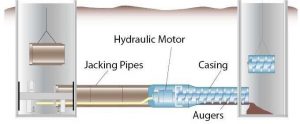
  • If the product pipe to be installed is larger than the auger casing, a connector is prepared at the rear end of the auger casing using a cutterhead machine, after which the product pipe is pushed/jacked directly behind the machine/cutterhead.
    Step – 2, Instal Cutterhead – Jacking Pipes

    The cutterhead is sized to match the pipe to be installed. Inside the cutterhead is a mechanical rotary motor driven by a hydraulic system. Soil entering the chamber inside the cutterhead is transported to the front/reception pit via a pre-installed auger.
    While pushing the pipe, the soil discharged through the auger is collected in a bucket, which is periodically lifted out of the pit and disposed of at a designated location. While the pipe is being pushed from the launch pit, the auger casing is disassembled at the receiving pit and prepared for the next location.
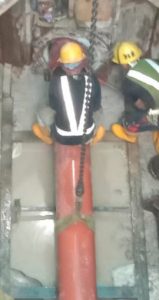
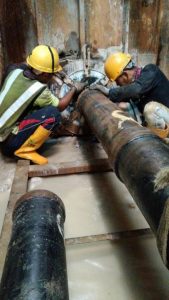
    Product Pipe Installation